
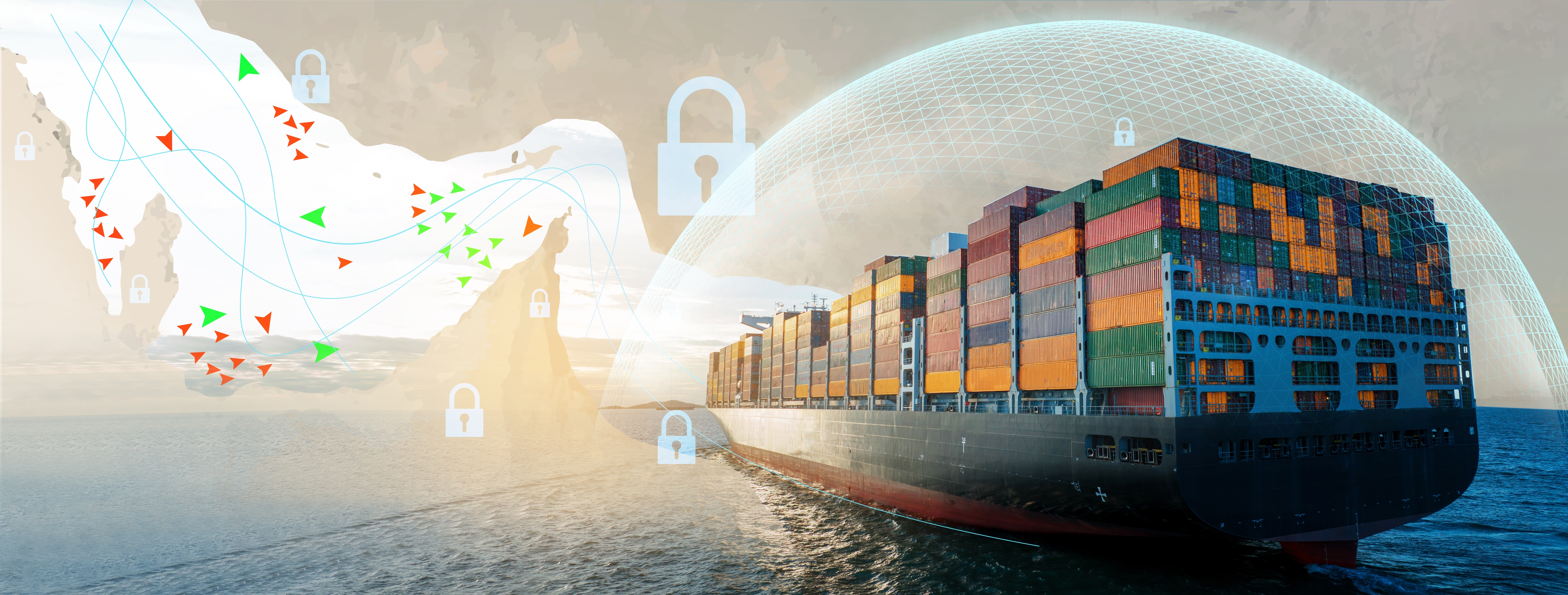
On February 28, the United States and Israel attacked Iran with the aim of neutralizing the country’s strategic capabilities and putting pressure on the theocratic regime in Tehran. For its part, Iran responded with attacks against Israel and bases with a U.S. military presence in Persian Gulf countries. One month later, this situation has had global repercussions, and global transportation, logistics, and international trade are already feeling the initial impacts.
- Blockade of Key Routes
The Strait of Hormuz, a maritime corridor between the Persian Gulf and the Indian Ocean, is vital to global energy trade as one of the world’s most important shipping routes. More than 20% of the world’s oil and gas passes through this channel, which is currently closed to maritime trade.
Given the current situation, many maritime services have rerouted their voyages to the Cape of Good Hope in Africa, increasing travel times by 10 to 14 days and reducing the available capacity of the global fleet by 10% to 15%.
The closure of airspace in the region has led to the cancellation of more than 20,000 flights, which, combined with a decline in passenger demand, has impacted major airlines such as Emirates, Qatar Airways, and Lufthansa.
- Economic Impact: Gasoline Prices
The global economy was already grappling with other issues such as the conflict between Russia and Croatia, the imposition of tariffs, and debts accumulated since the pandemic. Following the attack, oil prices rose by more than 25%.
This poses a challenge for countries such as South Korea, China, India, Japan, and others in the Middle East. In the case of Mexico, experts assert that the impact is reflected primarily in international crude and refined product prices, rather than in fuel availability.
- Increase in Transportation and Logistics Costs
Some of the factors contributing to the rise in transportation rates include, in addition to fuel costs, marine insurance premiums, which have increased by more than 1,000% in some cases. Experts note that the cost of moving a container between Turkey and China has risen from $2,000 to $10,000.
The repercussions of this conflict will continue to affect global transportation and logistics. Faced with this situation and uncertainty, importers and exporters must rely on top-tier providers like ED Forwarding, a member of PSA, which has the experience and capacity to redesign trade routes, anticipate delays, offer comprehensive solutions, and optimize costs.
